ECOSOCC-West Africa Forum: 33 years on, civil society wants to move from ideas to levers
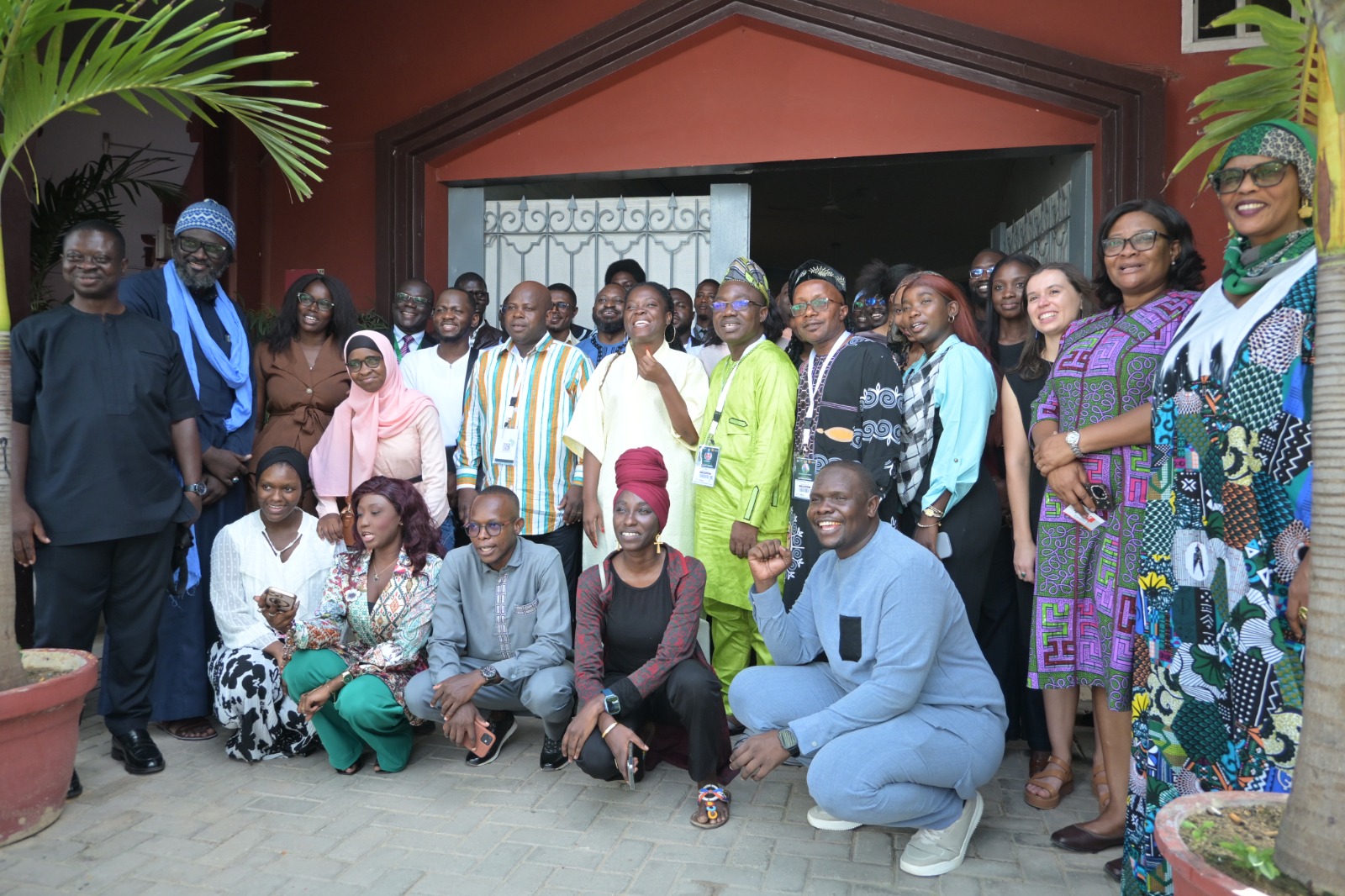
On the margins of the 89th Ordinary Session of the ACHPR, AfricTivistes, WADEMOS and WACSI convened the National Forum on the Operationalisation of ECOSOCC-West Africa in Dakar on Tuesday 13 October, with the support of Open Society Foundations. Civil society organisations, experts and young people took stock of a Council provided for since 1993 but never established, and of ways to finally make it operational.
A Council 33 years in the making
The 1993 Revised ECOWAS Treaty provides for an Economic and Social Council to give non-state actors a voice in regional decision-making: civil society, the private sector, trade unions and academia. Three decades later, it still does not exist. In March 2026, experts from member States met in Accra to review its institutional framework, roadmap and budget.
Abdou Aziz Cissé, Advocacy Officer at AfricTivistes, presented this framework to participants: what the Council is, and why it matters to citizens.
Identifying the obstacles, activating the levers
Opening the forum, Cheikh Fall, President of AfricTivistes, called on civil society to face up to the reasons for this delay: “It is urgent to look at ourselves and question the obstacles that, for three decades, have held back the idea of federating citizen action within our regional integration organisations.”
In his view, the Council already exists in practice, through the expertise that organisations such as WACSI, WADEMOS and AfricTivistes bring to ECOWAS. The challenge now is to institutionalise it: “We must go beyond ideas; we must identify the levers to put them into practice.”
From an “ECOWAS of States” to an “ECOWAS of the people”
Paul Osei-Kuffour, Coordinator of the WADEMOS network, recalled that the region’s challenges cross borders, from human rights violations to coups d’état. For him, the goal is to move from an “ECOWAS of States” to an “ECOWAS of the people”. “ECOSOCC is thought to strengthen our regional engagement as civil society,” he stressed.
He sees an opportunity in the current context. Since July 2026, Senegalese President Bassirou Diomaye Faye has chaired the ECOWAS Authority of Heads of State and Government. Since September, General Birame Diop, a former Senegalese Minister of the Armed Forces, has headed the ECOWAS Commission. He also welcomed the many young people at the table, a sign that the region’s future is being prepared today.
He then presented WADEMOS’s campaign for the operationalisation of the Council.
Spaces for citizen dialogue
Ibrahima Kane, lawyer and human rights defender, noted that ECOWAS, which has celebrated its 50th anniversary, is going through a fragile period. In his view, “CSOs and citizens need regional and sub-regional platforms for interaction; it is essential!” He added: “Designing an ECOSOCC framework means questioning how faithfully ECOWAS reflects citizens’ expectations, intentions and aspirations!” He also called on young people to rethink how we relate to one another, to rebuild an Africa made for all.
Franklin Oduro of TrustAfrica stressed the need for citizens to feel they are part of the system.
Digital tools as a lever for participation
For David Sohou, Director of Operations at CitizenLab, the Council will have to deliver on inclusion: “We believe that the success of ECOWAS-ECOSOCC will depend on its ability to ensure inclusive and accountable representation of civil society, to connect existing dialogue mechanisms, and to ensure that citizens’ contributions are genuinely taken into account in regional decisions.”
He sees digital tools as a way to get there: “Digital technology is a strategic lever to broaden this participation beyond in-person meetings, to make it easier to raise concerns and follow up on proposals, in order to build a Council that is accessible, connected to people’s realities and able to bring citizens and regional institutions closer together for the long term.”
This forum is the first of the three meetings AfricTivistes is co-organising on the margins of the session. They build on AfricTivistes’ pan-African citizen consultation, whose five major concerns were presented at the opening of the session.
- On Thursday 15 October, a meeting on protecting young women in social movements, with AWLF, Demos Kratos and AfricanDefenders.
- On Friday 16 October, a meeting on civic space under pressure in the Sahel and West Africa, with WACSI and RFLD, supported by EU SEE.
These activities are part of AfricTivistes’ 2025-2029 Strategic Plan.