LIFE AFTER COVID-19 IN AFRICA: AfricTivistes and Oxfam are working to increase young people’s involvement in the running of their communities
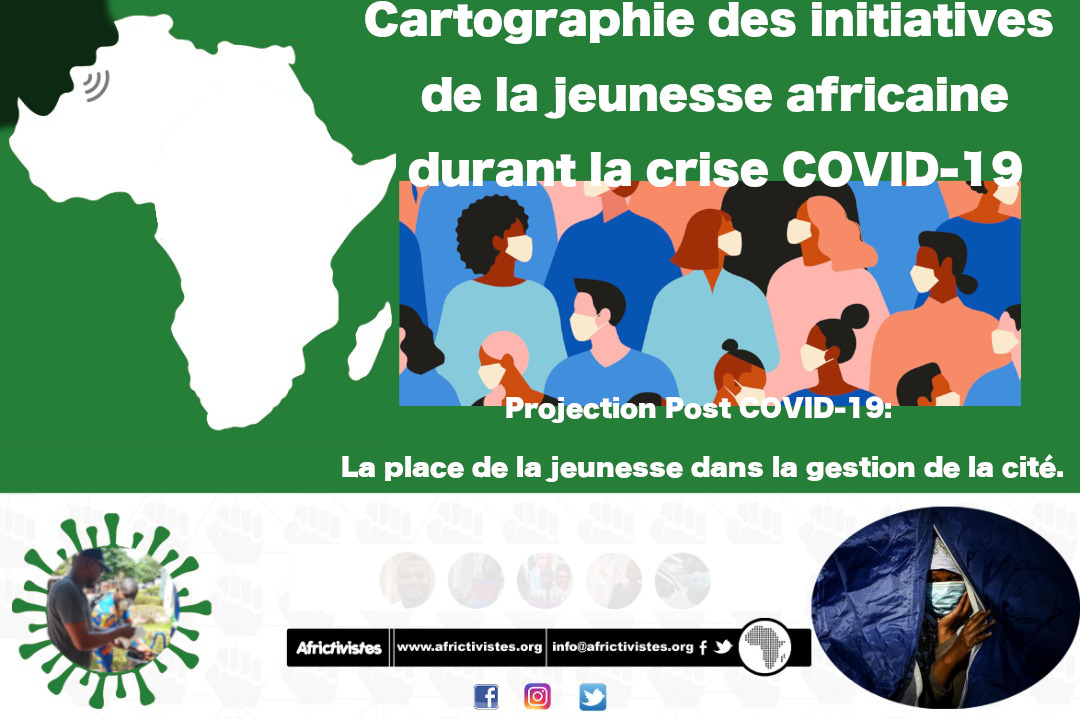
Life after COVID-19 is a concern around the world. The situation could be complex for Africa, which was already facing major challenges such as poverty and limited access to water, electricity, education and healthcare. As we look to rebuild on new foundations, AfricTivistes and Oxfam are calling for young people to play a greater role in putting forward ideas and solutions.
“How can young people contribute more to the governance of their communities in the wake of the COVID-19 pandemic?” AfricTivistes and Oxfam are seeking to answer this question through “Post-COVID-19 Outlook: The role of young people in community governance”. The project has two main strands. First, it will map initiatives led by young Africans during the COVID-19 crisis. It will also build a community and create an online forum for civic consultation.
This initiative is based on the recognition that young Africans have been at the forefront of the response to COVID-19, through social, technical and civic initiatives. From Dakar to Addis Ababa, hundreds of technology projects responding to COVID-19 have emerged, each with its own innovative and compelling approach. The initiative also recognises that, alongside some civic movements, individuals have taken spontaneous action to help their communities. Others have gone further, building partnerships with public authorities and local councils.
In Senegal, for example, youth organisations volunteered to support healthcare workers during the crisis. Young people also worked with local councils to make and distribute masks. Some exercised their right to civic oversight, calling for transparency and accountability during the health crisis. Social media played an important role, serving as the main channel for raising concerns about possible cases of poor governance in the distribution of food aid and the management of the Response Fund established by the Senegalese government, estimated at 1,000 billion CFA francs.
Recognising the need to sustain this energy and build on these initiatives to improve life after COVID-19 in Africa, AfricTivistes, in partnership with Oxfam, is identifying the most active youth organisations. It is examining their collaborations with public authorities and local councils to help create sustainable, resilient communities and cities.
AfricTivistes and Oxfam also hope that mapping these initiatives will show the true role young people play in community governance. It will help highlight a new, more confident role for young people, who make up around 64% of Africa’s population. By mapping youth initiatives across areas including citizenship, good governance, tackling fake news, technology and human rights, AfricTivistes will gather qualitative evidence to advocate for greater involvement of young Africans in decision-making in their respective countries.
Through this project, AfricTivistes and Oxfam are pursuing several objectives. First, they aim to showcase young people’s initiatives in response to COVID-19, demonstrating their power to bring about change and mobilise others. This will help them propose partnerships with governance bodies at local, national and regional levels.
The project will showcase 100 youth-led initiatives in response to COVID-19 and their impact. It will also bring together an online community around these initiatives, creating a network for exchange and inspiration to support young people’s civic engagement. Another aim is to encourage collaboration between youth organisations, local councils and public authorities, so that young people have a greater role in decision-making and civic oversight.
Alongside podcasts, a series of webinars will give young people a chance to discuss the role they should play in society, ways of working with public authorities and local councils, civic engagement and community management. The project will also produce storytelling content and videos to share on social media. In addition, it will create a database of young people interested in civic engagement and civic leadership, with a view to potentially supporting their work and helping sustain their initiatives on citizenship and volunteering.
The project will run for three months, starting on 1 July 2020. Ten countries have been selected: Mauritania, Ghana, Senegal, Nigeria, Mali, Niger, The Gambia, Benin, Côte d’Ivoire and the Central African Republic.