Senegal: a virtual civic space that is becoming increasingly restricted
At the inauguration of the headquarters of the High Command of the National Gendarmerie and the Directorate of Military Justice at the Samba Diéry Diallo barracks in Dakar, the President of Senegal, Macky Sall, in the presence of members of the government and the armed forces, once again lambasted social media, describing it as “new forms of disruption to public order and national destabilisation.” This statement comes a few days after the arrest of citizens for “illegally disseminating documents” via their online platforms, which constitutes a violation of their freedom of expression and their right to information.
As soon as he came to power in 2012, Macky Sall’s first significant move against those active in cyberspace was to expel the famous blogger and Chadian pro-democracy activist Makaila Nguebla from Senegal in May 2013. On several occasions, the Senegalese Head of State has taken jabs at social media users.
“Idle wanderers” or simply describing cyberspace as a “lawless zone”, the President of the Republic has never shied away from criticising social media. But unlike his other outbursts, this time he has compared the “abuses” common on these digital platforms to the threats posed by terrorism, drug trafficking, maritime piracy and illegal immigration networks…
This is not the first time the President of the Republic has done this. In May 2021, during the opening of a regional hospital, he made barely veiled threats against young people who demonstrate civic engagement – for better and often for worse – through social media.
On 3 February 2021, going beyond mere declarations, the Head of State instructed his government to put in place a “specific regulatory and supervisory framework for social media”. At the time, AfricTivistes, like other organisations, had already warned of the “dangers of such a framework for democracy and freedom of expression”, as it would operate outside the judicial system.
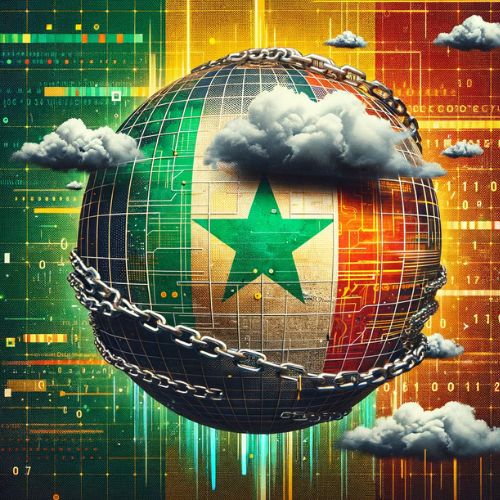
All the more so as this government drive to regulate social media and govern the internet began in 2018 with the National Assembly’s passing of the Electronic Communications Code. Article 27 of this law had sparked controversy, as it raised the spectre of potential censorship on platforms such as Facebook, Twitter (X)…
It should be noted, however, that all online offences are already covered by existing legislation, including certain legal provisions such as the Cybersecurity Act passed in 2008.
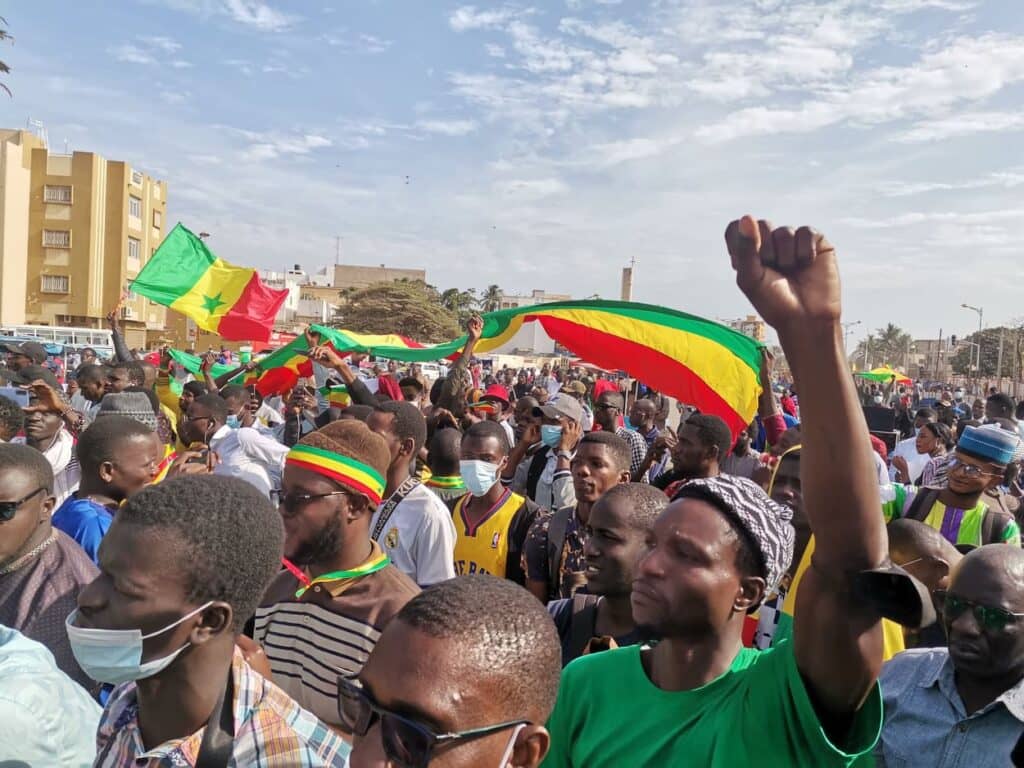
These repeated attacks on citizens’ voices expressed via social media were followed by actions in early June and late July this year, during demonstrations that were violently cracked down on. AfricTivistes, through a series of press releases, had strongly condemned this censorship of cyberspace. Recently, several dissenting voices – notably pro-democracy activists and opinion leaders – have either been censored or sent to prison.
As a reminder, in August 2022, the late Pape Ibra Guèye, better known by the nickname Papito Kara, was arrested and remanded in custody for spreading false news and deleting and altering newspaper records. His arrest followed a satirical parody of the front page of the newspaper “L’Observateur”.
On 7 December 2022, Fadillou Kéita, a member of Pastef – the dissolved party of opposition leader Ousmane Sonko – was also arrested on the orders of the public prosecutor following a Facebook post for spreading false news.
A few months later, it was the turn of the rapper Mor Talla Guèye, also known as NitDoff, to be arrested for spreading false news, contempt of court and making death threats against the judicial authorities. He was granted bail on 16 October, after eight months in prison.
Ndeye Fatou Fall, known as Falla Fleur, an online activist, was arrested on 30 May 2023 at her place of work by members of the Criminal Investigations Division (DIC), before being remanded in custody. Held in custody since 7 June for “acts and manoeuvres likely to compromise public security through posts on social media”, she was released on 6 November. This non-exhaustive list is representative of the censorship that prevails in Senegalese cyberspace.
Article 8 of the Senegalese Constitution guarantees all citizens fundamental individual freedoms, including freedom of opinion and freedom of expression.
It reaffirms this in Article 10, stating that everyone has the right to freely express and disseminate their opinions through speech, writing, images or peaceful demonstrations, provided that the exercise of these rights does not infringe upon the honour and reputation of others or undermine public order.
Principles guaranteed and protected by Article 19 of the International Covenant on Civil and Political Rights and Article 9 of the African Charter on Human and Peoples’ Rights.
AfricTivistes strongly condemns all forms of illegal internet censorship, particularly those that have a disproportionate impact on freedom of expression, freedom of information and freedom of assembly. We also deplore the fact that there are no incentives at national or regional level to encourage the authorities to respect these rights. We encourage the Government of Senegal to respect fundamental rights and freedoms, and to honour its regional and international commitments to guarantee citizens’ rights to a peaceful, transparent and inclusive electoral process in February 2024.