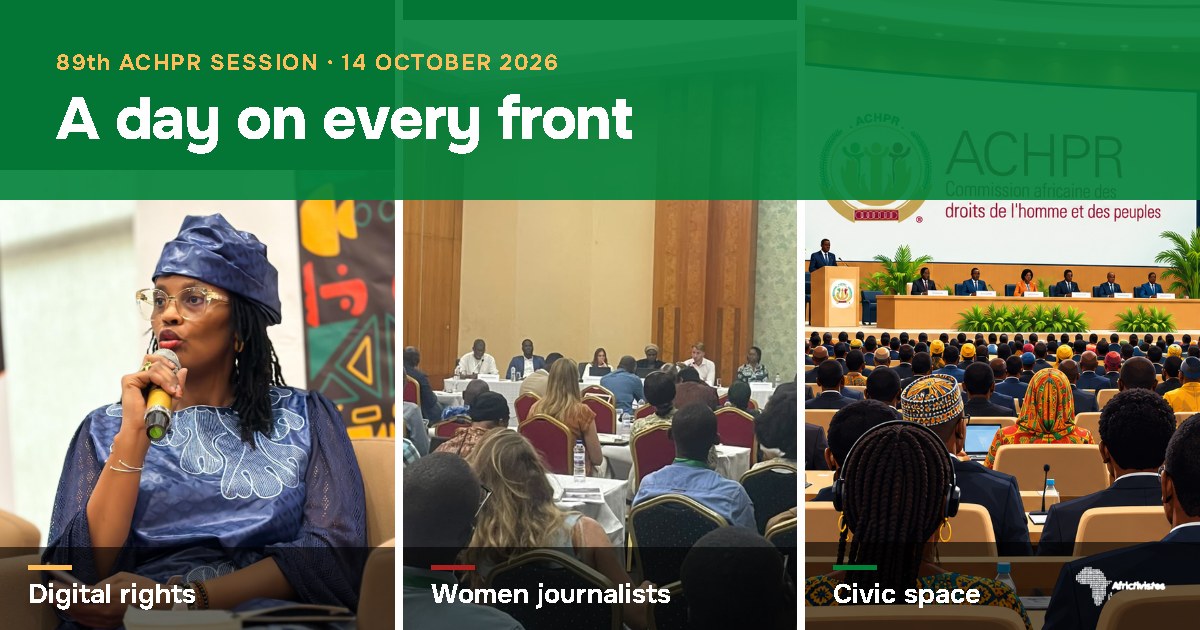
89th Session of the ACHPR: in Dakar, the African Charter celebrates its 40th anniversary with a focus on accountability
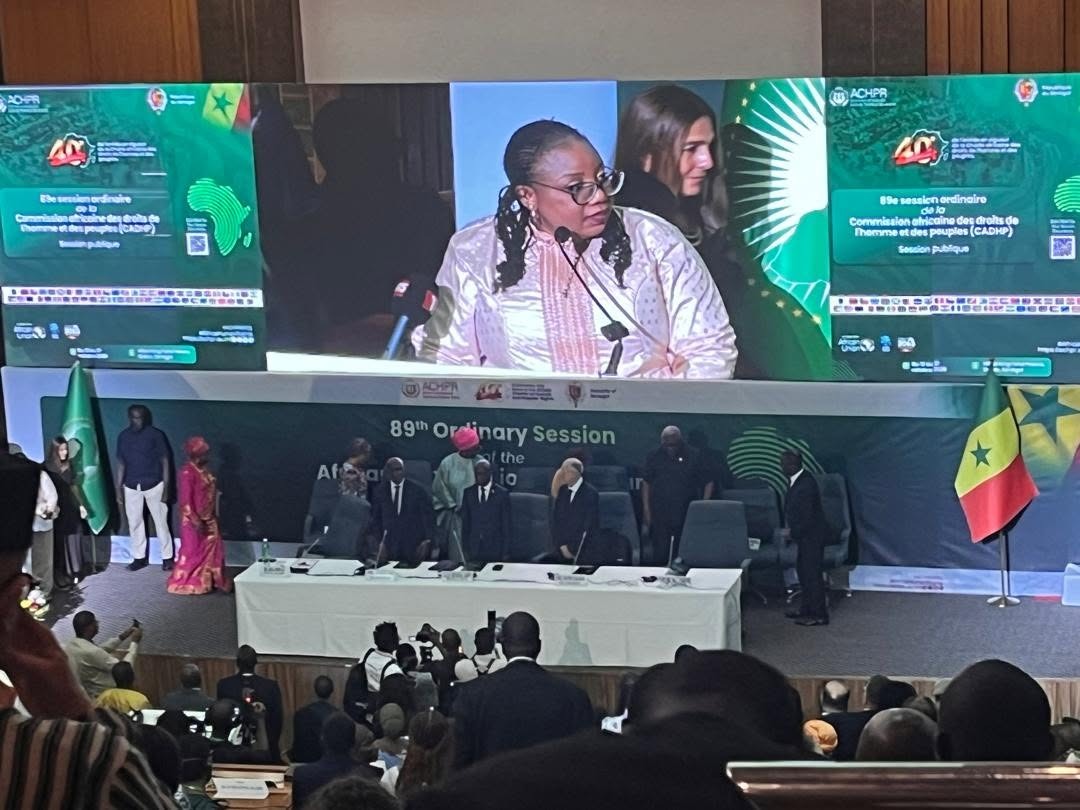
The 89th Ordinary Session of the African Commission on Human and Peoples’ Rights (ACHPR) opened on Monday 12 October in Dakar, at the King Fahd Palace. More than 1,400 delegates from the 54 States Parties to the African Charter are expected until 21 October. Preceded by the NGO Forum, the session brings together States, institutions and civil society around a shared demand: that the rights guaranteed by the Charter make a real difference in citizens’ lives.
Dakar, where the Charter took shape
This session coincides with the 40th anniversary of the entry into force of the African Charter on Human and Peoples’ Rights. Adopted in 1981 in Nairobi, the Charter entered into force on 21 October 1986, a date celebrated ever since as African Human Rights Day. The session will close on that very day.
Hosting this session in Dakar carries particular significance. President Léopold Sédar Senghor, together with Gambian President Dawda Jawara, championed the idea of the Charter. Senegalese jurist Kéba Mbaye chaired the committee of experts that drew up its preliminary draft, which met in Dakar in 1979.
The NGO Forum, civil society’s gateway
From 8 to 10 October, the NGO Forum organised by the African Centre for Democracy and Human Rights Studies (ACDHRS) brought together more than 200 civil society actors. Discussions focused in particular on access to water and sanitation, and on the state of freedoms in the Sahel.
Hon. Justice Solomy Bossa, Chairperson of the ACDHRS Board: “Human rights are not privileges. They are inherent to every human being, and protecting them is a shared responsibility.”
Barrie Freeman, Deputy Special Representative of the UN Secretary-General for West Africa and the Sahel (UNOWAS): “We need safe civic spaces where NGOs can organise and take part in decision-making.” She also stressed that “ensuring fair, inclusive and sustainable water management is not only a development imperative; it is also an investment in conflict prevention”.
Julien Ngane Ndour, Director of Human Rights, representing the Minister of Justice: “Future generations will not ask us how many times we talked about water. They will ask us what we did to make it accessible.”
An opening focused on accountability
The opening ceremony was held under the high patronage of the President of the Republic, Bassirou Diomaye Faye, represented by the Minister of Justice, Moussa Sarr. The session is co-organised with the Ministry of African Integration, Foreign Affairs and Senegalese Abroad, headed by Cheikh Niang.
Justice Idrissa Sow, Chairperson of the ACHPR: “The true measure of the African Charter’s strength lies above all in its ability to bring real change to the lives of the women and men whose rights it guarantees.” He also warned that “African unity cannot be proclaimed in texts and contradicted in daily life”, that the fight against terrorism “cannot become a space of exception to fundamental rights” and that democracy “is not limited to organising elections”.
Moussa Sarr, Minister of Justice, recalled that “there are no human rights without a power that is accountable”. In his view, a protection system “is not measured by the number of its texts or sessions. It is measured by what it actually changes in people’s lives”. He stressed the enforcement of decisions, “an unenforced judgment undermines citizens’ trust”, and access to information: “A right you do not know about is a right you cannot claim.”
Willy Nyamitwe, representing Burundi, called for “building an Africa where peace is founded on justice”.
Prof. James Mouangue Kobila, Chairperson of the Cameroon Human Rights Commission, raised concerns about pre-trial detention, torture in prisons and the protection of African land and resources.
At the press conference that followed, the ACHPR Chairperson was clear about the situation of human rights defenders: “the threat is reprisals”. He recalled that the Commission follows these situations closely, that defenders can bring cases before it, and that documenting violations paves the way for accountability.
Carrying communities’ voices
AfricTivistes is taking part in this session to make citizens’ realities heard. Ahead of the session, its pan-African citizen consultation, conducted with the CitizenLabs, Sahel Activistes and Sahel Résilience, highlighted five major concerns:
- civic space under pressure;
- threatened digital rights;
- obstacles to citizen participation;
- difficult access to justice and protection;
- insufficient follow-up and accountability.
The message carried to Dakar is simple: citizens are not only asking to be heard; they are asking for their rights to be protected and their recommendations followed up. The consultation remains open on the platform.
As a reminder
On the margins of the session, AfricTivistes is co-organising three meetings :
- this Tuesday 13 October, the National Forum on the Operationalisation of ECOSOCC-West Africa, the future ECOWAS Economic and Social Council, with WADEMOS and WACSI;
- on Thursday 15 October, a meeting on protecting young women in social movements, with AWLF, Demos Kratos and AfricanDefenders;
- on Friday 16 October, a meeting on civic space under pressure in the Sahel and West Africa, with WACSI and RFLD, supported by EU SEE.
These activities are part of AfricTivistes’ 2025-2029 Strategic Plan and build on its citizen consultation.