The crisis in Senegalese democracy: Reasons for concern
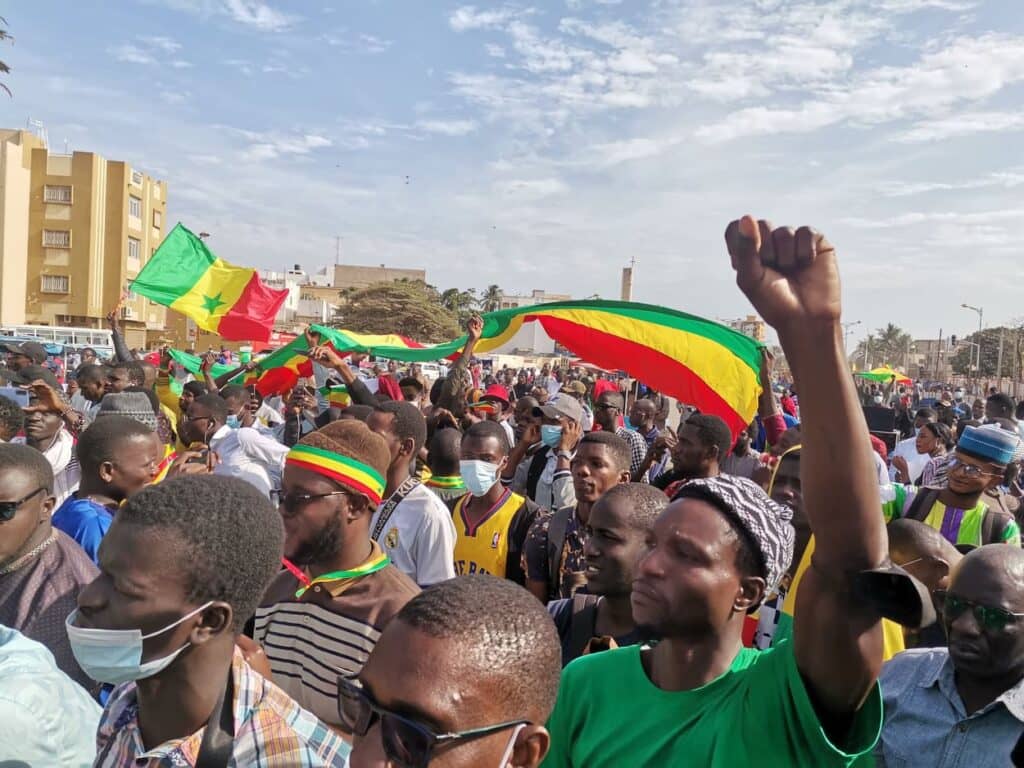
Senegal, a country long regarded as a model of democracy in West Africa, is currently undergoing a period of crisis of a kind rarely seen before, characterised by political tension, human rights abuses and uncertainty regarding the country’s peaceful stability. Recent events, such as the arrest and imprisonment of political opponents, the misappropriation of public funds (particularly in relation to the Covid-19 response), restrictions on press freedom (including the summoning and arrest of journalists), and popular protests, raise questions about the state of democracy in Senegal.
Face à ces menaces de plus en plus assumées, il est crucial d’examiner les causes profondes de cette crise et de s’interroger sur la manière dont les autorités politiques et les institutions peuvent œuvrer pour préserver et renforcer la démocratie au Sénégal.
Senegal in the Macky era
February 2012: Macky Sall was elected President of Senegal with 65.8 per cent of the vote, defeating the outgoing President Abdoulaye Wade in the second round of the presidential elections. This election is regarded as an example of a peaceful democratic transition in Africa, as it followed a period of pre-election tensions marked by violent protests against Abdoulaye Wade’s third bid for office, which was deemed to be in breach of the two-term limit on presidential terms. Macky Sall was the key political figure who capitalised on this popular demand to limit presidential terms to two.
April 2013: Karim Wade, son of former President Abdoulaye Wade, faces charges of corruption and embezzlement of public funds. He is suspected of having illegally acquired a considerable fortune by exploiting his position within the government. Karim Wade is arrested and charged with illicit enrichment. A highly publicised trial ensued, lasting nearly two years. In March 2015, he was sentenced to six years’ imprisonment and fined 138 billion CFA francs for himself, plus a further 10 billion CFA francs to be paid collectively with his accomplices (approximately 338 million dollars) for illicit enrichment. In June 2016, having served approximately half of his sentence, Karim Wade was granted a presidential pardon. He now denounces his forced exile in Qatar. His candidacy for the 2019 presidential election was rejected by the Constitutional Council on the grounds of his conviction, which resulted in the loss of his civil rights.
March 2016: Macky Sall organised a constitutional referendum to introduce a “constitutional lock” limiting the number of consecutive terms of office and reducing the presidential term from seven to five years. The referendum was approved by a majority of voters (62.7 per cent), although voter turnout was low (40 per cent).
March 2017: Khalifa Sall, Mayor of Dakar and a leading opposition figure, was arrested on suspicion of forgery and the use of forged commercial documents, forgery and the use of forged administrative documents, fraud involving public funds, embezzlement of public funds, money laundering and criminal conspiracy. Elected as a Member of Parliament whilst his case was under investigation, he was kept in prison in breach of all the rules governing parliamentary immunity. He was sentenced in 2018 to five years’ imprisonment. His candidacy for the 2019 presidential election was also rejected by the Constitutional Council, which ruled that his conviction resulted in the loss of his civil rights. He too was granted a presidential pardon in September 2019 but has still not had his civil rights restored.
March 2019: Macky Sall was re-elected for a second term in the February 2019 presidential election with 58.27 per cent of the vote. The election was marked by the disqualification of two opposition candidates, Khalifa Sall and Karim Wade, due to criminal convictions
February 2021: Ousmane Sonko, a prominent figure in the political opposition and leader of the Pastef movement, was accused of sexual assault by an employee at a beauty salon where he used to go for massage sessions. Sonko denied the allegations and described them as a political plot aimed at removing him from the Senegalese political scene. The complainant filed a complaint alleging rape and death threats. Following these accusations, Sonko was arrested on 3 March 2021 and charged with disturbing public order and taking part in an unauthorised demonstration whilst on his way to court to face the sexual assault charges. His arrest triggered massive and violent protests across Senegal, resulting in around ten deaths and numerous injuries. The demonstrators denounced what they saw as an attempt to muzzle the opposition and demanded Sonko’s release.
These protests, which have been met with a very violent crackdown, are also fuelled by wider frustrations regarding the country’s economic and social problems, as well as concerns about democracy and the independence of the judiciary. Some political observers believe that the charges brought against him are politically motivated, aimed at discrediting and weakening a political opponent, whilst others see them purely and simply as a political manoeuvre to sideline a serious potential rival. This whole crisis has sparked criticism and concerns regarding the fairness of the electoral process since Macky Sall came to power, as Ousmane Sonko could be the third political opponent to be sidelined from the presidential race.
August 2022: A report by the Court of Auditors on the audit of the management of the Covid-19 Response and Solidarity Fund (Force Covid) has highlighted alleged ‘management failings and criminal offences’ said to have been committed during the years 2020–2021. It also highlights conflicts of interest and breaches of the Public Procurement Code. This same court has published annual reports which have very often identified problems with public finance management in several sectors, such as education, health, infrastructure and local authorities. In April 2020, AfricTivists was already calling for greater transparency in the management of the Covid-19 crisis.
The crisis in democracy: Reasons for concern
The failure of the political elites: One of the main threats to Senegalese democracy lies in the failure of the political elites to embody and implement democratic principles. In their quest for power, these elites often become practitioners of autocracy once elected, thereby undermining the institutions and mechanisms of oversight and accountability that are essential to the functioning of a healthy democracy.
Corruption and poor governance: Corruption and poor governance are also factors contributing to the weakening of Senegalese democracy. Cases of embezzlement of public funds and mismanagement, as well as the failure to prosecute those responsible, foster a climate of mistrust between citizens and state institutions. This sense that there is no fair and independent justice system fuels frustration and unrest.
Attempts to seize power: Limiting presidential terms of office is key to ensuring democratic renewal and preventing the monopolisation of power. Unfortunately, in Senegal as in other African countries, political figures champion the principle of term limits whilst in opposition. However, once elected, they seek to circumvent or amend the rules to remain in power for life, thereby jeopardising democratic stability. Abdoulaye Wade has already done so, and today, all the signals coming from Macky Sall cast doubt on his willingness to respect this “constitutional safeguard” which he himself proposed for inclusion in the Senegalese Constitution during the 2016 referendum.
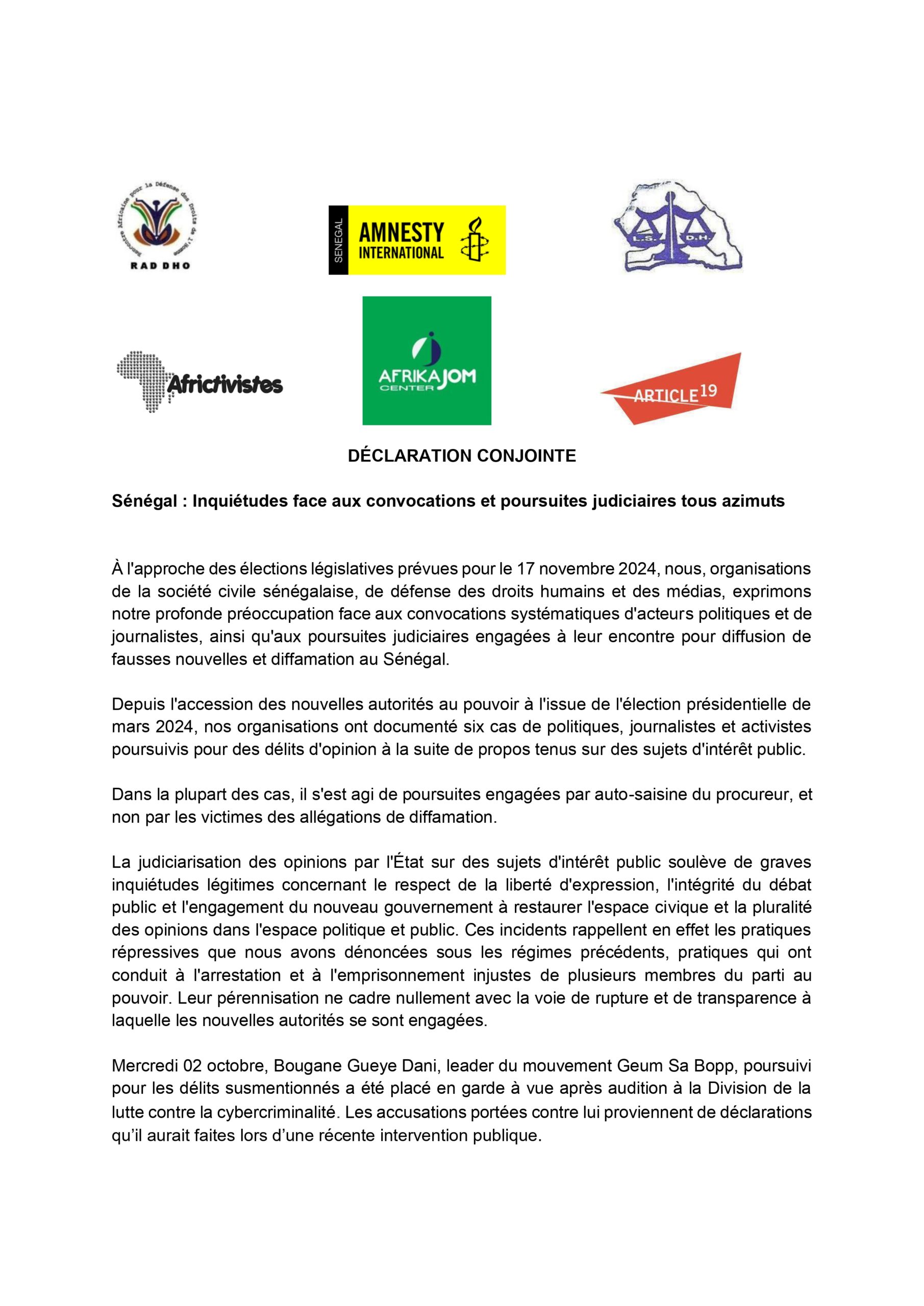
Threats to fundamental freedoms: Restrictions on freedom of the press, freedom of expression and the right to demonstrate pose a further threat to democracy in Senegal. These restrictions are often justified on grounds of security or public order, but they may in fact be used to silence the opposition and prevent citizens from expressing themselves freely on matters of public interest. They also point to a two-tier justice system, as whilst some are arrested and sent to prison for a Facebook post, others continue to enjoy their freedom after having publicly incited murder. Following several arrests of journalists and threats against certain media outlets and social media platforms, the NGO Reporters Without Borders has condemned the worrying climate facing journalists and the media.
This alarming picture of President Macky Sall’s record during his 11 years in power highlights the political tensions in Senegal and raises questions about the independence of the judiciary, freedom of expression and respect for human rights in the country.
What should we do?
There is an urgent need to adopt measures to strengthen democracy and protect democratic achievements. A mere call for political dialogue cannot be the solution. Such dialogue must be preceded by a prerequisite – and not a minor one at that – namely, respect for the rules of the democratic process, which are the guarantee of democratic alternation of power and political stability in Senegal. President Macky Sall inherited a stable and democratic Senegal. It is therefore his historic responsibility, stemming from his commitment to republican values and his moral duty, to preserve our democratic achievements – the fruit of many years of struggle and sacrifice.
It is therefore the responsibility of President Macky Sall – to whom the sovereign people have entrusted the task of ensuring their peaceful existence and safeguarding their laws and rights – to lay the foundations for constructive dialogue.
These foundations cannot be established without taking the following points into account:
- Compliance with the limit on presidential terms of office, as set out in Article 27 of the Constitution of Senegal, in order to spare Senegal what could be one of its worst political crises.
- The restoration of the rule of law by guaranteeing and strengthening freedom of expression and the protection of citizens’ rights, including freedom of expression and the right to demonstrate peacefully. These rights must be respected and protected. The arrests of activists, journalists and political opponents must cease.
- Creating the conditions for an inclusive and constructive dialogue, starting with an official announcement that he is not standing as a candidate in the presidential election on 24 February 2024. He must then commit to organising free and transparent elections. Divisions and provocations must not take precedence over the search for common solutions.
- Creating the conditions to enable his successor to implement political and institutional reforms to ensure the independence of institutions and the separation of powers. These measures must be strengthened to guarantee transparent and fair elections.